
Introduction: Why PMP Certification Matters
In today’s competitive and fast-paced business environment, organizations rely heavily on skilled project managers to deliver successful results. Across industries such as technology, construction, healthcare, and finance, projects must be carefully planned, executed, and monitored to meet business objectives.
Organizations prefer PMP-certified professionals because they demonstrate strong leadership, strategic thinking, and the ability to manage complex projects effectively. According to PMI salary surveys, professionals with PMP certification can earn 20–25% higher salaries than those without the credentials.
In this guide, we will explore:
- What PMP certification is
- Key project management concepts
- PMP knowledge areas
- Benefits of PMP certification
- Career opportunities after certification
Understanding Project Management
What is Project Management?
Project management is the process of planning, organizing, executing, monitoring, and completing projects within defined constraints such as time, cost, and scope.
A project is a temporary effort undertaken to create a unique product, service, or result. Unlike routine operations, projects have specific start and end dates and clear objectives.
Examples of projects include:
- Building a residential apartment complex
- Developing a mobile application
- Launching a new business product
- Implementing enterprise software systems
- Organizing a corporate event.
Successful project management ensures that project goals are achieved while satisfying stakeholder expectations. Professionals preparing for the Project Management Professional (PMP) certification must understand structured methodologies and globally accepted best practices used in managing projects.
Why PMP Certification Is Important
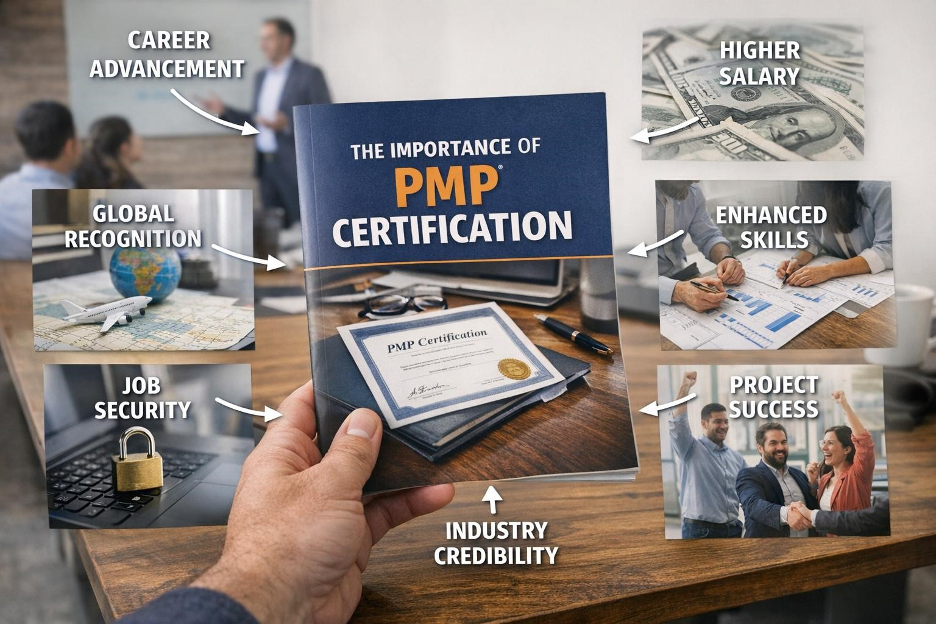
The Project Management Professional (PMP) certification is widely considered the gold standard in project management credentials. Professionals pursue this certification for several important reasons.
1. Better Career Opportunities
PMP certification is recognized worldwide, enabling professionals to work across multiple industries and international markets. Many organizations prefer hiring certified project managers because they bring structured methodologies and proven management skills.
2. Higher Salary Potential
One of the most attractive benefits of PMP certification is increased earning potential. Studies consistently show that PMP-certified professionals earn significantly higher salaries compared to non-certified project managers.
3. Improved Project Management Skills
PMP training strengthens essential skills such as:
- Project planning
- Scheduling
- Budget management
- Risk analysis
- Team leadership
These skills help professionals manage projects more efficiently and improve project outcomes.
4. Increased Professional Credibility Holding a PMP certification demonstrates expertise, experience, and commitment to professional development. It builds trust with employers, stakeholders, and project teams.
5. Global Networking Opportunities PMP certification connects professionals to the global network of the Project Management Institute (PMI), providing access to industry resources, events, and professional communities.
Skills You Gain from PMP Training
PMP training provides professionals with critical competencies that improve project performance and leadership capabilities. Some of the most valuable skills gained include:
- Project planning and scheduling
- Budget and cost control
- Risk identification and mitigation
- Stakeholder communication
- Leadership and team coordination
- Agile and hybrid project management methodologies
These skills allow project managers to deliver projects efficiently while aligning them with organizational goals.
Career Opportunities After PMP Certification
Obtaining the PMP certification can significantly expand career opportunities and open doors to leadership positions. Common roles for PMP-certified professionals include:
- Project Manager
- Program Manager
- Project Coordinator
- Project Consultant
- PMO Manager
- Operations Manager
Many industries actively recruit PMP-certified professionals, including:
- Information Technology
- Construction
- Engineering
- Healthcare
- Finance
- Telecommunications
As businesses increasingly rely on project-based operations, the demand for certified project managers continues to grow worldwide.
The Future of Project Management
The demand for skilled project managers continues to grow as organizations expand and adopt new technologies. Key trends shaping the future of project management include:
- Agile project management methodologies
- Hybrid project management frameworks
- Artificial intelligence tools for project planning
- Data-driven decision making
Professionals who combine PMP certification with modern digital tools and agile skills will remain highly competitive in the job market.
Conclusion
The Project Management Professional (PMP) certification is one of the most valuable credentials for professionals seeking to build or advance a career in project management. By mastering key areas such as scope management, risk management, communication, and stakeholder engagement, PMP-certified professionals become valuable assets to organizations.